
BLOG POSTS
A cheaper fertilizer can save $66,000 a year and still lose money
Switching from a premium fertilizer to a cheaper one looks like an easy win on paper. In the example below, a 10,000 ft² facility moving off Front Row Ag 3-Part to a program that costs about a third as much per gallon saves $66,881 a year. That number gets attention in a budget meeting.

RO Water Isn't Zero Alkalinity: Why pH Drifts Up and Lines Scale on RO
You run RO, so alkalinity isn't your problem. The tank reads on target. Then the far dripper reads a few tenths higher, the filters start crusting white, and someone suggests turning off the pH injector because the feed "wants" to sit higher anyway.

How to Store Dry Soluble Fertilizers
Dry soluble fertilizers are potent, precision tools for high-value crops, but their effectiveness hinges on proper storage. Neglecting environmental controls can lead to clumping, degradation, and inaccurate nutrient delivery, directly impacting crop health and yield. Implementing simple, systematic storage protocols protects your investment and ensures consistent, predictable results from your carefully formulated nutrient recipes.

Hydroponic KPIs & Efficiency Metrics
Efficiency in high-value crop production is found at the intersection of input costs, environmental stability, and time management. Tracking hydroponic KPIs transforms a facility from a reactive environment into a precision manufacturing center where yields are predictable and resources are never wasted. By focusing on objective data points, facility managers can identify invisible leaks in their production and drive consistent results cycle after cycle.

Silica Deficiency Signs in Commercial Cultivation
Silica deficiency silently erodes plant strength, making high-value crops vulnerable to environmental stresses and mechanical damage. Addressing this often-overlooked nutrient gap is crucial for boosting crop resilience, improving quality, and safeguarding yields against common cultivation challenges.
Source Water Chemistry as a Control Variable in Commercial Cultivation
The use of carbon filtered water hydroponics is paramount for achieving consistent nutrient delivery and maximizing yields in specialty cultivation. Establishing a clean water baseline eliminates unseen variables, ensuring optimal plant health and nutrient solution consistency throughout every growth phase.

The Importance of pH Management Across Crop Growth Stages
Precise pH management is one of the most powerful levers in hydroponic production. By keeping pH tightly within the 5.5–6.0 window, growers unlock full mineral availability, prevent hidden lockout, and protect against both deficiency and toxicity, even at perfect EC. Paired with Front Row Ag’s stable, phase-specific nutrient system and correct mixing order, disciplined pH control turns the rhizosphere into a predictable, high-performance environment that consistently returns premium yields.

Why Electrical Conductivity Management Is Critical for Plant Hydration and Growth
Managing a large‑scale facility profitably requires a shift from “more feed equals more yield” to “controlled osmotic environment equals consistent yield and quality.” When you treat EC as a tool for managing how plants drink, not just how much fertilizer you add, you remove invisible bottlenecks that stall growth and compress margins.
How Beneficial Microbes Fit into Advanced Fertility Strategies
Moving from sterile fertigation to a controlled synganic strategy is one of the most meaningful upgrades a commercial facility can make. Instead of “just feeding the plant,” you’re managing an ecosystem.
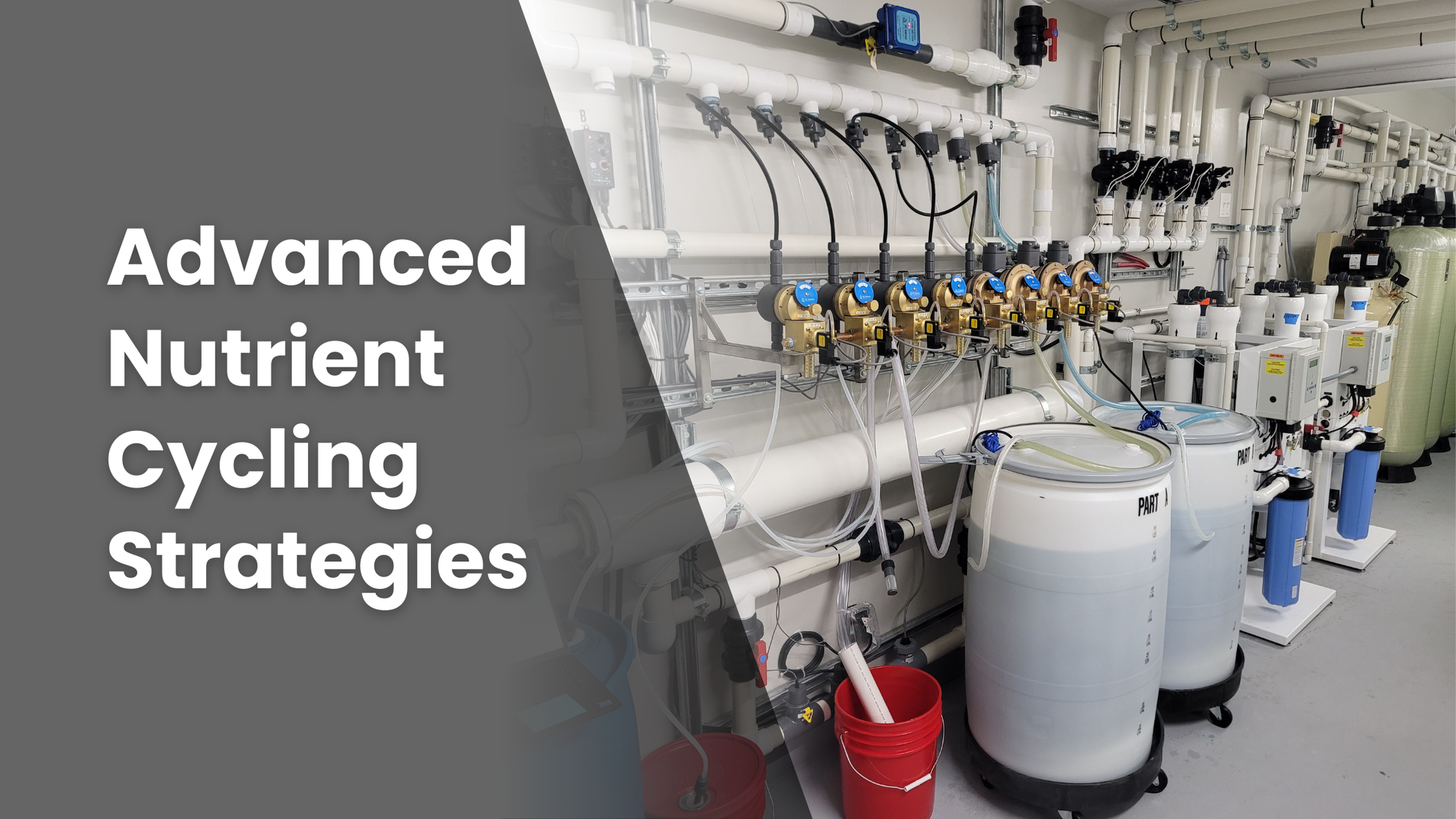
Advanced Nutrient Cycling Strategies to Boost Production
Stop fighting the "mix and dump" treadmill. Learn how advanced nutrient cycling transforms your fertigation into a stable, predictable engine for crop excellence. By mastering the management of EC and pH drift, commercial cultivators can eliminate the invisible bottlenecks that lead to biofilm buildup and mineral lockout. Discover how to leverage the Front Row Ag system, including enzymatic mobilization with PhosZyme and beneficial rhizobacteria with Triologic, to extend reservoir life, reduce fertilizer waste, and ensure your plants maintain peak metabolic momentum from veg through the final ripen.
Why Water Temperature Management Matters in Commercial Crop Nutrition
Cold water can quietly stall a high‑value crop, even when your lighting, CO₂, and EC are perfect. This article breaks down why keeping nutrient solution roughly between 65–71°F is the true metabolic throttle for dissolved oxygen, mineral uptake, and silica performance—and how both cold stalls and warm‑reservoir biofilm rob you of yield. Learn how to pair precise water temperature control with high‑strength Front Row Ag mixing, BioFlo line cleaning, and PhosZyme/Front Row Si integration so every plant sees the same stable, high‑performance root zone.
How Nutrient Timing Impacts Plant Yield and Quality
Stop using a "static recipe" and start feeding for the phase. Learn how to master nutrient timing by aligning EC, pH, and N-P-K ratios with vegetative growth, stretch, bulking, and ripening to eliminate guesswork and achieve repeatable, high-quality harvests with Front Row Ag.
Common Mistakes That Reduce Cultivation Yield and Quality
Yield and quality losses are rarely the result of a single failure. They are the result of compounding mistakes in environment, nutrition, and irrigation. From mastering VPD stability to perfecting your silica mixing order, learn the technician-level steps needed to eliminate cultivation drift and achieve predictable, high-performance harvests.
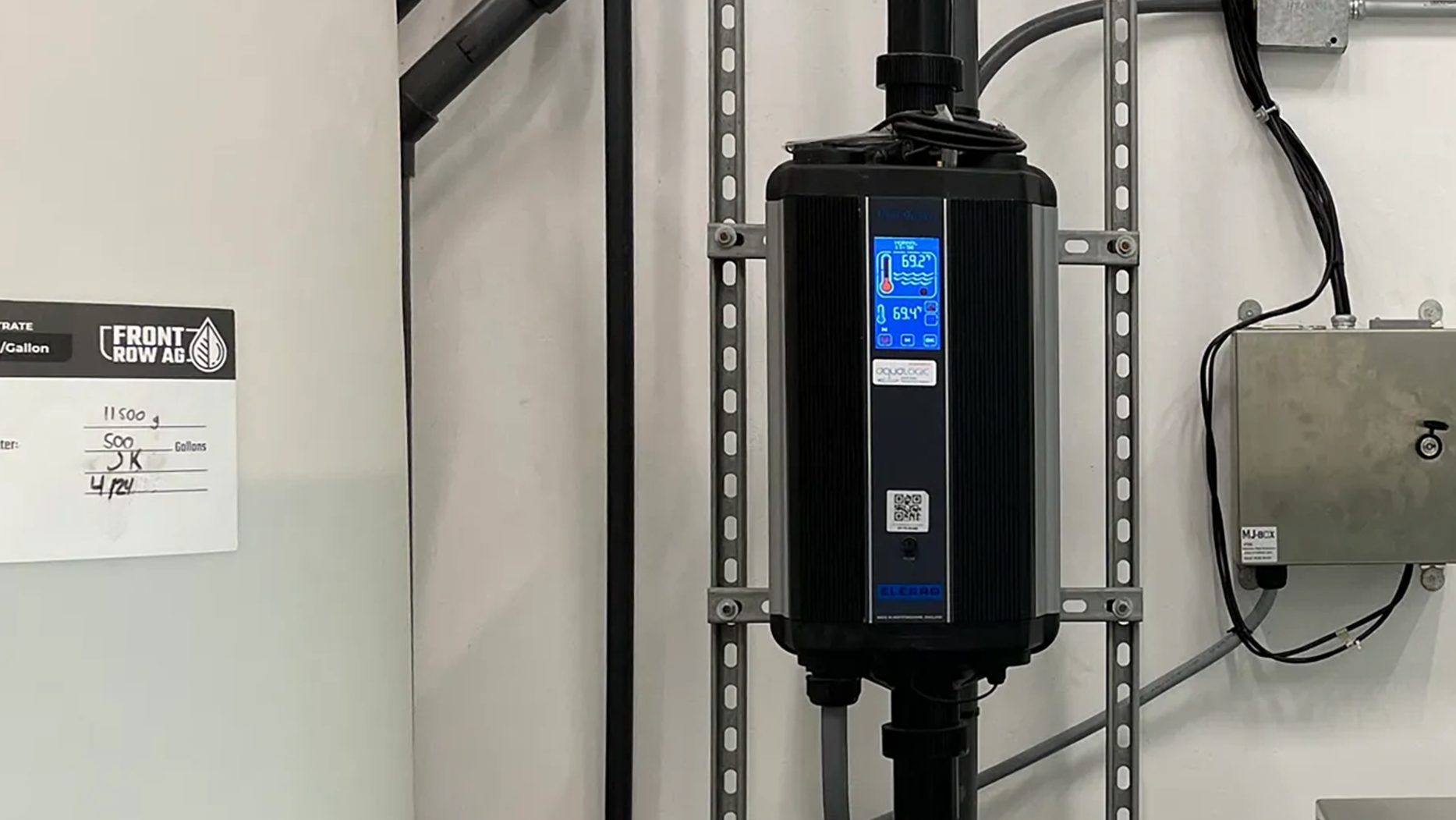
Water Temperature and Hydroponics
Water temperature is an underrated factor in hydroponics that affects nutrient solubility, oxygen levels, and root health. Ignoring it can lead to poor nutrient uptake, pathogen growth, and reduced yields. Maintaining an optimal 18-22°C (65-72°F) range ensures plant health and consistent crop quality.
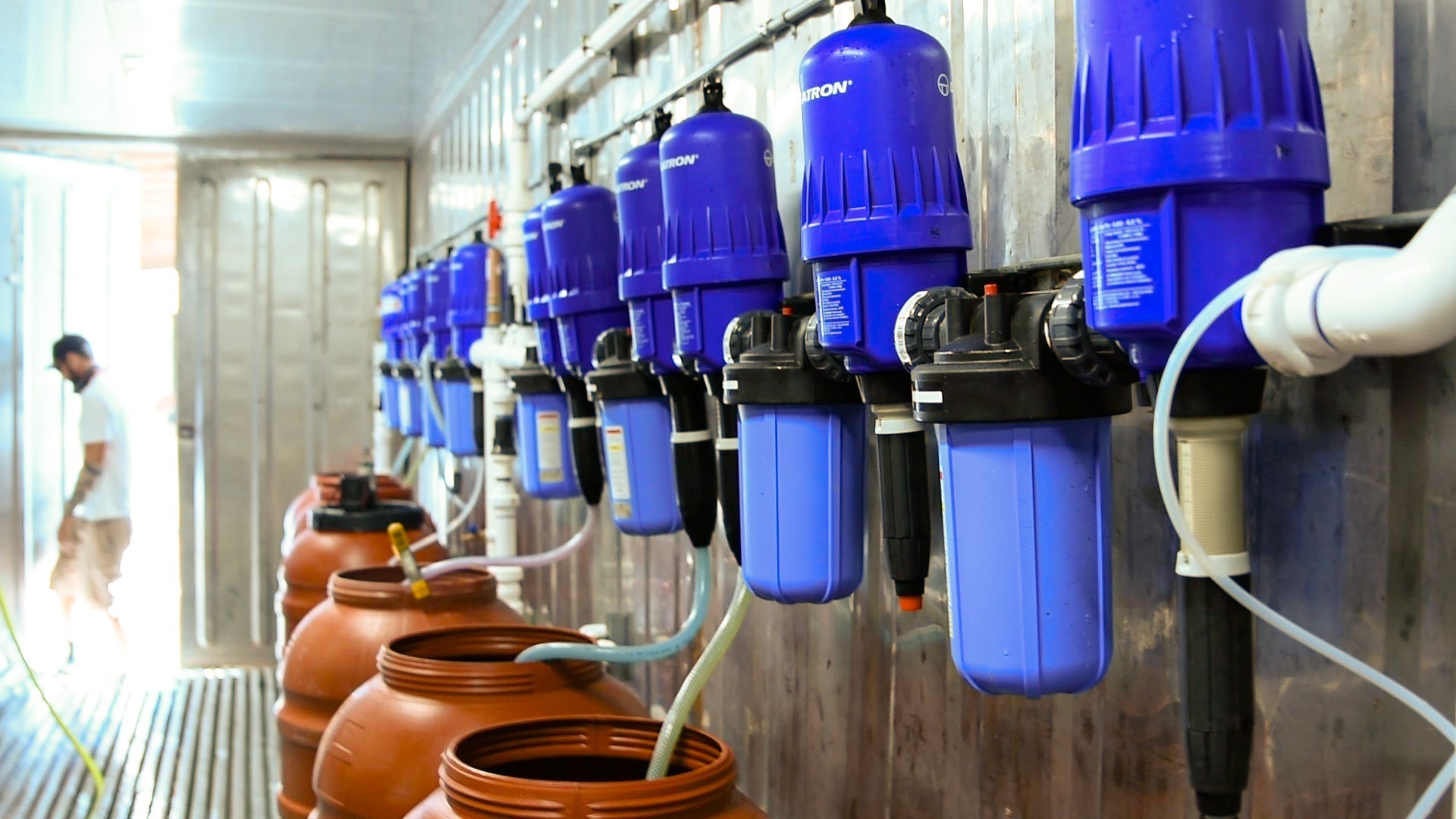
How to Configure Your Dosatron Panel for Front Row Ag Fertilizer
How to configure and optimize Dosatron fertigation system for precise nutrient delivery of Front Row Ag fertilizer.

7 Factors That Cause Precipitation in Hydroponics And How To Avoid Them
Precipitation in hydroponic solutions can lead to reduced nutrient availability, clogged emitters, and compromised plant health. This 3-part guide focuses on the causes, manifestations, and troubleshooting steps for precipitation.

Understanding Front Row Ag Feed Charts
A technical guide to Front Row Ag Feed Charts covering stock concentrate methods (3-2-2) vs. direct-to-reservoir (DTR), along with phase-specific recipes designed to optimize plant performance throughout the growth cycle.

What Causes Irrigation Line Clogs? Monitoring & Maintenance Best Practices
A guide to irrigation system clogs in cultivation - their causes and effective solutions. Learn how to prevent, identify, and address blockages through best practices in water treatment, nutrient management, irrigation system design, monitoring, maintenance and more. 3 case studies included!

pH in Practice
Adjusting pH levels, choosing from common bases and acids for pH adjustment, understanding the sequence of pH adjusters for fertigation systems, and the importance of calibration and accurate pH measurement.

Water Cleanliness in Irrigation Systems
Water quality issues arise from seasonal changes, temperature shifts, and poor filter maintenance. This article compares effective pathogen risk reduction through disinfection methods like UV light, ozone, peroxides, hypochlorous acid, and chlorine compounds like Calcium Hypochlorite.

Unlock Your Grow’s Potential With This Unbelievably Simple Equation: $/ft2/day
Calculate $/ft2/day for each cycle and cultivar, associate the outcome changes with their causes, then do whatever is required to further increase $/ft2/day. If a cheaper input (e.g. fertilizer) decreases price or yield - you can easily lose much more revenue than you saved in OpEx.

Understanding pH: More Than You Wanted To Know (Part 2)
How nutrient absorption affects rootzone pH, when to use acids or bases, commonly used acids and bases in hydroponics, and considerations on pH management for cultivators.

Understanding pH: More Than You Wanted To Know (Part 1)
The chemistry of pH, acids, and bases and practical implications for cultivation.

Lean Manufacturing in Canxxxis Cultivation
Implementing these lean manufacturing principles gives cultivators the best chance of improving and adapting in an uncertain and competitive production environment.
Optimizing Flower Site Density for Maximum Yield
Optimizing the density of flower sites within the canopy is essential for maximizing yield and quality in a garden. In this article, we will explore how to achieve optimal plant density by balancing plant size, spacing, and veg duration.

Feed EC Considerations in Hydroponics
Expert advice on 6 key factors to consider when setting up a successful feed EC system for your plant growth cycle: irrigation strategy, substrate dryback and water content targets, light intensity and quality, climate considerations (VPD), and the phase of growth.
Subscribe to our blog
New articles. Directly to your inbox.